Why drainage matters for a drive
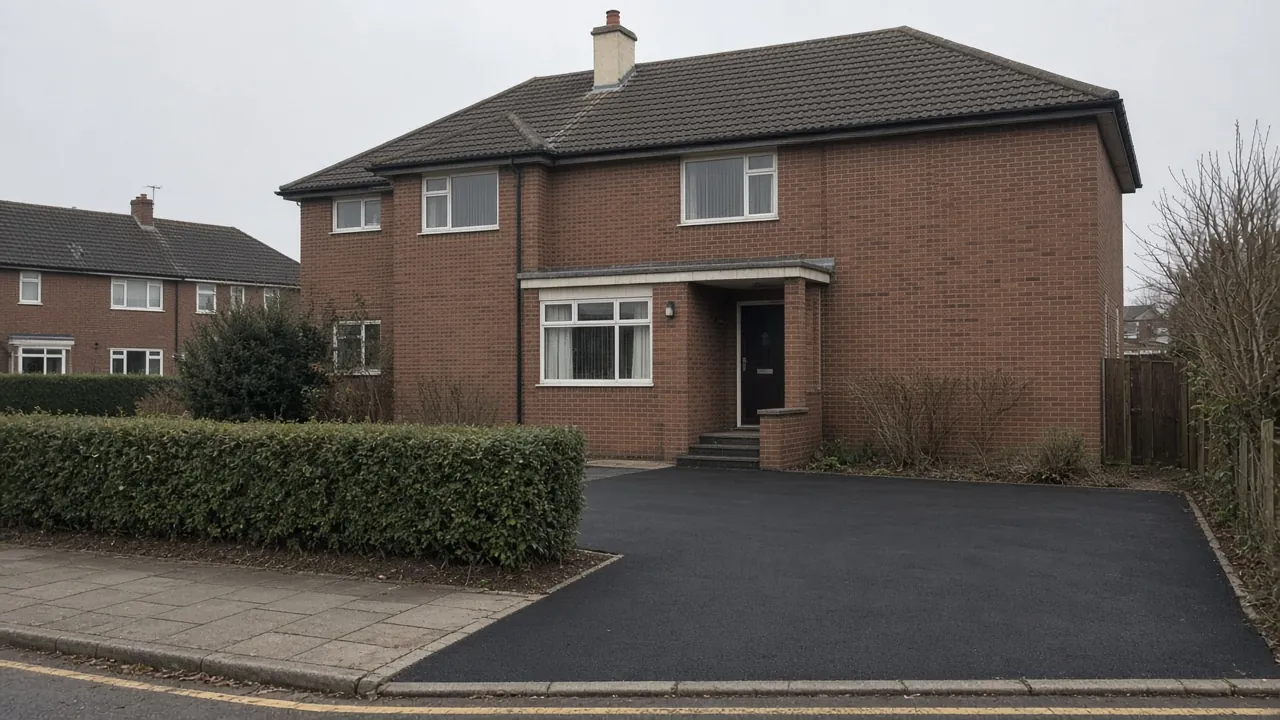
A typical front drive is a large, flat, hard area right next to the house. If its water has nowhere to go, the result is puddles by the front door, ice in winter, water against the walls and, on a sloping street, run-off across the pavement. The government's guidance on paving front gardens also points out that hard surfaces collect oil, petrol and brake dust, and that many drains carry rainwater straight to streams and rivers. Keeping water on site is better for the house and for the becks and the sea.
It is also a planning matter. A solid front drive of more than five square metres that drains onto the road needs planning permission, as explained in our guide to driveway planning permission in Redcar.
Start with the ground
The British Geological Survey's Geology Viewer shows two very different kinds of ground under Redcar's housing areas:
- Blown sand in central Coatham, carried inland off the beach by the wind, over Redcar Mudstone. It drains quickly but is loose, so the sub-base needs good edge restraints to stop it creeping.
- Glacial till across most of the rest of town, including Dormanstown, Kirkleatham, Newcomen, Zetland, West Dyke, Wheatlands and the Lakes Estate. Till is a dense, stony clay that holds water and softens when wet.
Every plot is different. Old foundations, buried rubble or imported soil can sit on top of either, so we dig a trial hole at the survey, and for a soakaway we test how fast the ground actually drains.
The order of preference
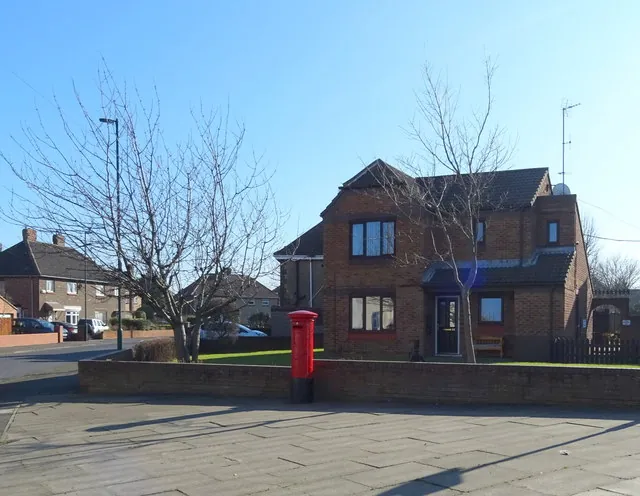
Approved Document H, the building regulations guidance on drainage, sets a clear order for where rainwater should go:
- Into the ground, through a soakaway or other infiltration
- To a watercourse, if infiltration is not practical
- To a sewer, only if neither of the first two is possible
Rainwater must never go into the foul sewer, the pipe that takes toilet and kitchen waste. The Environment Agency explains that most modern homes have two separate systems, and that wrongly connected pipes are a common cause of river pollution. Connecting to a public surface water sewer also needs permission from the sewerage company, which in Redcar is Northumbrian Water.
The main options
Permeable surfaces
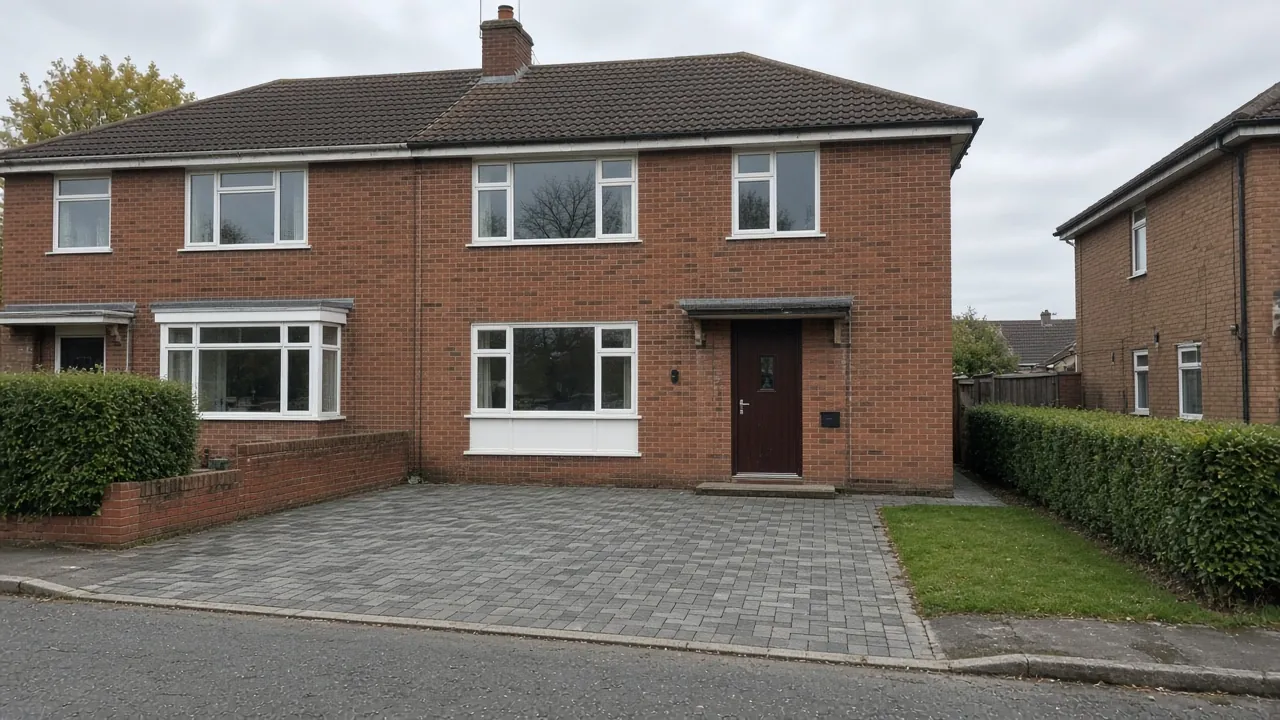
Permeable block paving, resin-bound gravel on a porous base, and gravel in a grid all let rain soak through the surface into an open-graded stone base below. The government guidance explains that this stone stores water while it soaks into the ground. On Coatham's sand, that usually works on its own. On clay, the base needs to be deeper to hold water for longer, and the guidance notes that on clay soils a connection to a drain may be needed for heavy, prolonged rain. Our resin driveways, block paving and gravel driveways pages explain each build.
Fall to a border or lawn
A solid drive, such as standard block paving or tarmac, can be laid to fall towards a planted border, gravel strip or lawn, which takes the water. This meets the planning rule as long as the soft area can cope. On clay, it needs to be generous in size.
Channel drain to a soakaway
Where a drive falls towards the house or the garage, a channel drain across the bottom collects the water and pipes it to a soakaway. Approved Document H guidance is that soakaways should be at least 5 metres from a building, which can be hard to achieve on a short Redcar frontage. On clay, the soakaway also has to be sized for slow ground after a percolation test, and sometimes a soakaway is not practical at all.
Approved connection
If the ground will not take the water, the last option is a connection to a surface water sewer, with the agreement of Northumbrian Water. We would not make one without that agreement.
Mistakes that cause problems
- Falling towards the house. Every drive should fall away from the building, or to a drain in front of it.
- Building up too high. Approved Document C guidance is that the damp-proof course should be at least 150mm above the adjoining ground or paving. A new drive laid on top of an old one can easily breach that and lead to damp.
- Blocking air bricks. Raising levels can cover the vents under suspended floors, found in many older houses.
- A permeable top on a solid base. Resin on old concrete, or permeable blocks on standard hardcore, looks porous but holds water.
- Water onto the pavement. Run-off across the footway is a nuisance in rain and dangerous in frost.
Check your flood risk
The Environment Agency's long-term flood risk service shows the risk from rivers, the sea and surface water for any address. Our area pages note that the Environment Agency maps Flood Zone 3 within a few hundred metres of parts of Coatham and Dormanstown, mostly on low ground. Surface water flooding after heavy rain is the more common local issue on clay. It is worth checking your own address before choosing a design.
The surface water rebate
Northumbrian Water explains that part of a household sewerage bill can include a charge for surface water drainage, the service that takes rainwater away from homes. If your home is not connected to surface water drainage at all, you may be entitled to a rebate, though you still pay towards highway drainage. A permeable drive alone will not usually qualify if the roof still drains to the sewer, but it is worth knowing if your whole property drains to soakaways.
Questions people ask
Do I need a drain on my driveway?
Not always. A permeable drive, or one falling to a border, may need no drain. A drive falling towards the house usually needs a channel drain.
Will a soakaway work in Redcar?
On Coatham's sand, often yes. On the clay found across most of Redcar, only after a percolation test, and it must be at least 5 metres from the house.
Can driveway water go into the house drains?
Never into the foul sewer. A connection to a surface water sewer needs Northumbrian Water's agreement.
Is a permeable drive better on clay?
It can work on clay with a deeper base to store water and, where needed, an approved overflow.
Sources: GOV.UK: Approved Document H, drainage and waste disposal; GOV.UK: guidance on the permeable surfacing of front gardens; GOV.UK: Approved Document C, resistance to moisture; Environment Agency: check long-term flood risk; BGS Geology Viewer; Northumbrian Water: charges and surface water drainage; Environment Agency blog: wrong pipe, wrong place (misconnections).