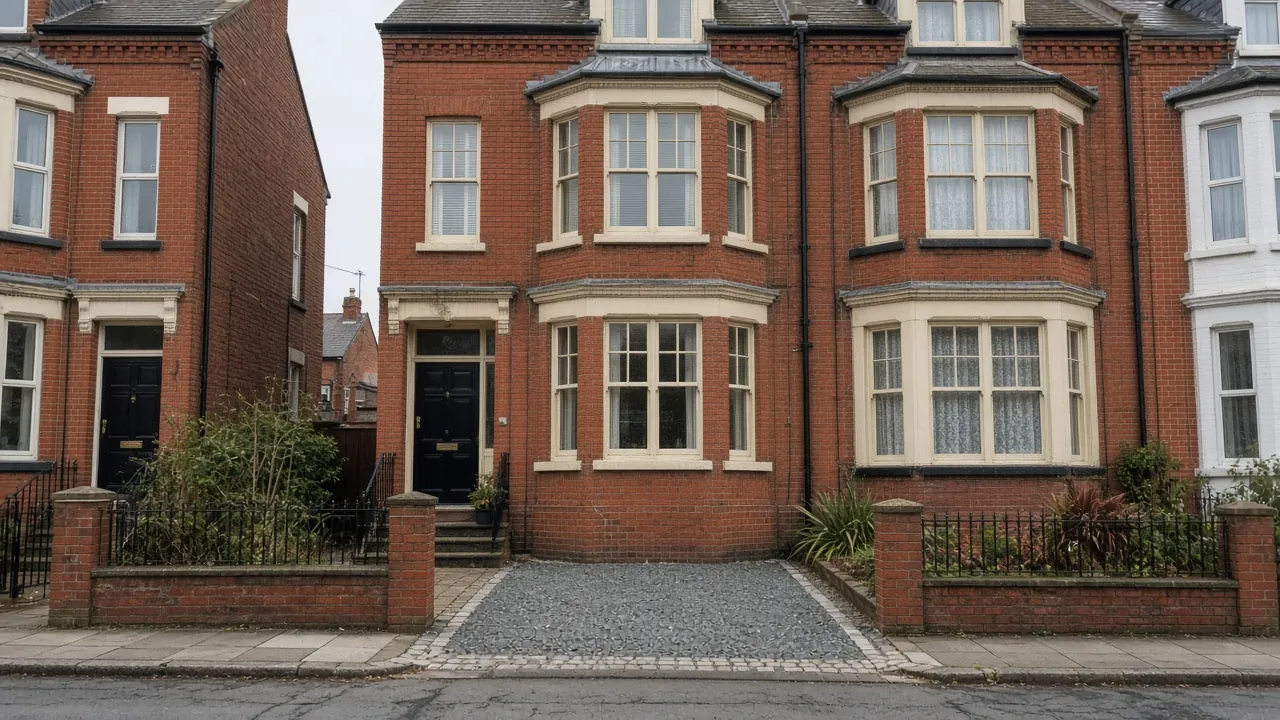
The national rule: the five square metre test
Since 2008, householders in England have needed planning permission to cover more than five square metres of a front garden with a traditional, impermeable surface that drains onto the road. The government's guidance on paving front gardens explains why: solid paving sends rainwater, and the oil and dust it picks up, into drains that often lead straight to streams and rivers, and across a whole street that adds to flood risk.
The Planning Portal sets out what does not need permission, for a house, whatever the size of the drive:
- Permeable or porous surfaces, such as gravel, permeable concrete block paving or porous asphalt, which let water drain through
- Solid surfaces where the rainwater is directed to a lawn or border to drain naturally
So the question is not really "how big is the drive?" but "where does the rain go?"
What counts as permeable
A surface is only permeable if the whole build lets water through, not just the top layer. The government guidance explains that permeable drives use an open-graded sub-base, such as 4/20 or Type 3 stone, with spaces that pass and store water, rather than standard hardcore full of fine material. Our guide to resin or block paving compares the main surfaces.
In practice, the options we build that meet the rule are:
- Resin-bound gravel on a porous base. Our resin driveways page explains the build
- Permeable block paving, with wider joints filled with grit. See block paving
- Gravel, ideally in a stabilising grid. See gravel driveways
- Standard block paving or tarmac with a planted border or soakaway taking the run-off
Our guide to driveway drainage in Redcar covers how to make each option work on sand and on clay.

The exceptions that catch people out
Flats and maisonettes
The Planning Portal is clear that these permitted development rights apply to houses, not flats or maisonettes. In Coatham, where flats sit alongside the Victorian terraces, any new front drive needs to be checked with the council.
Article 4 Directions and planning conditions
Rights can be removed in particular areas by an Article 4 Direction, or on particular estates by a planning condition attached to the original permission. The council notes that many of the borough's conservation areas have Article 4 Directions giving extra protection. Some estates were also built with conditions restricting front-garden changes; your property deeds or the council can confirm this.
The dropped kerb
Driving over a pavement without a dropped kerb is not allowed, and the crossing is a separate approval from the drive. In Redcar, the property owner applies to Redcar and Cleveland Council. Our step-by-step guide to getting a dropped kerb in Redcar covers the process.
The Planning Portal adds that a dropped kerb is not usually a planning matter in itself, but planning permission can be needed if the road is classified or a trunk road, the property is divided into flats, structural work is needed to make the parking area, or the property is listed or in a conservation area.
Walls, gates and railings
Taking down a front wall is often part of creating a drive. Outside conservation areas, low walls and gates are generally permitted development within height limits, but in a conservation area, demolishing a front wall or railings can need permission.
Redcar's conservation areas
Redcar and Cleveland Council lists 17 conservation areas in the borough. Two cover parts of Redcar itself:
- Coatham, designated in 1982, originally as the Redcar Conservation Area. It takes in the old hamlet around High Street West and the Victorian terraces running towards Kirkleatham Street. Frontages are often shallow, so the question is frequently whether a space is deep enough as well as whether it is allowed.
- Kirkleatham village, designated in 1970, around the historic estate village and Sir William Turner's Hospital, which is Grade I listed. The housing estates in the Kirkleatham ward are outside it.
Further along the coast, Saltburn has an Article 4 Direction, in force since 10 September 2021, under which building or altering a boundary wall or gate needs planning permission. The council's Saltburn page explains which changes are covered.
In any conservation area, we suggest speaking to the council's planning team before removing a front wall or railings or changing the look of a frontage. Clay pavers or setts that suit the street usually sit better than plain concrete, as our Coatham page explains.
Listed buildings
If your home is listed, changes to its frontage, walls or setting can need listed building consent as well as, or instead of, planning permission. In Redcar this includes buildings such as Dormans Crescent in Dormanstown and the historic buildings of Kirkleatham village.
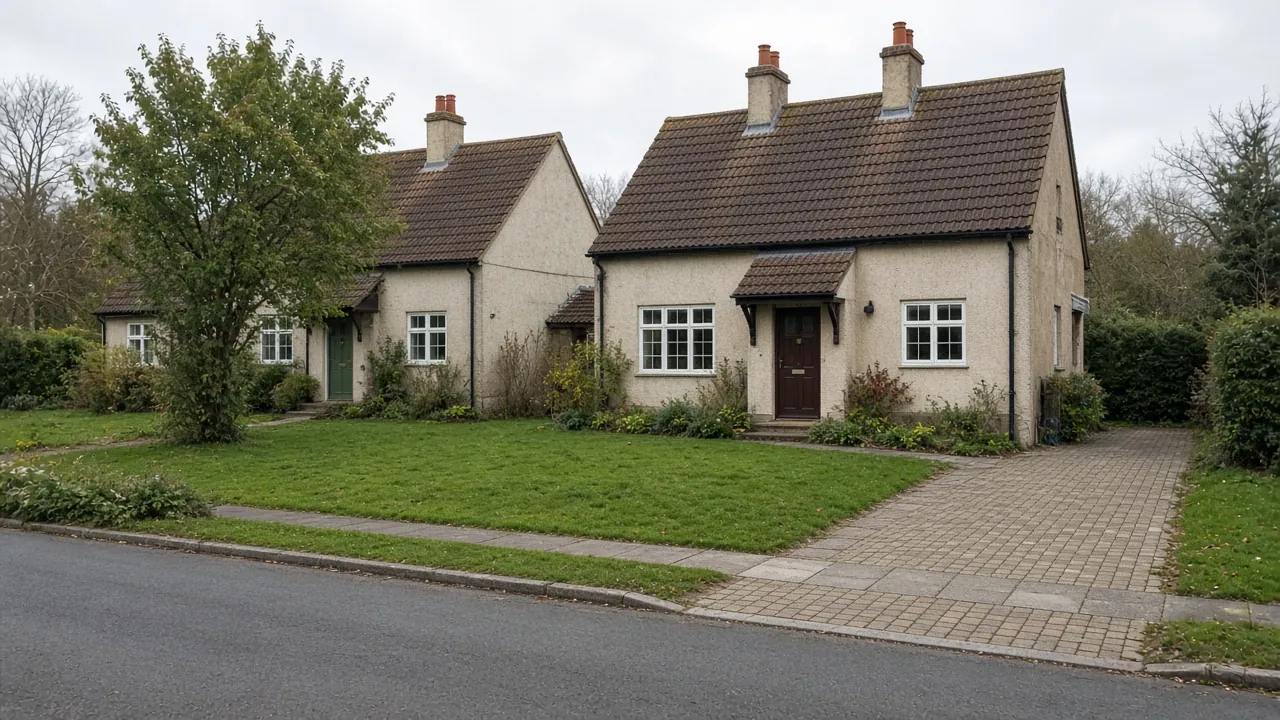
A quick checklist
- Is the property a house, rather than a flat or maisonette?
- Will the drive be permeable, or drain to a lawn or border?
- Is it in the Coatham or Kirkleatham conservation area, or is the building listed?
- Do the deeds or the original planning permission restrict front-garden changes?
- Is a new or wider dropped kerb needed, and is the road classified?
- Does the work involve removing a front wall or railings?
If the answers are house, yes permeable, no, no, kerb approved and no, planning permission is not normally needed. We go through this list at the survey and point out anything you should check with the council.
Questions people ask
Do I need planning permission for a block paved drive?
Not if it is permeable block paving, or standard blocks draining to a lawn or border. Solid paving over five square metres that drains to the road needs permission.
Is resin a permeable surface?
Resin-bound gravel on a porous base is permeable. Resin laid on solid concrete is not.
Do I need planning permission for a dropped kerb in Redcar?
Usually you need highway approval from the council rather than planning permission, but permission can be needed on classified roads, for flats, or in conservation areas.
Can I pave my front garden if I live in a flat?
Flats do not have permitted development rights for front-garden paving, so check with the council first.
Sources: Planning Portal: paving your front garden; Planning Portal: dropped kerbs and planning permission; GOV.UK: guidance on the permeable surfacing of front gardens; GOV.UK: permitted development rights for householders, technical guidance; Redcar and Cleveland Council: conservation areas; Redcar and Cleveland Council: Saltburn Article 4 and Local Development Order.